
ALKION PRESS IS A SMALL PRESS THAT PUBLISHES AND DISTRIBUTES BOOKS DEVOTED TO EDUCATION, ART, AND THE HUMAN SPIRIT.
Note: Due to high international shipping costs we only deliver throughout the US
NEW RELEASES

By Eric G. Müller
Questions, more than anything, have fueled this book: What is music? How far back can we trace its history? Why does music affect us so profoundly? Who are the people who have shaped the course of music through the ages? Müller pursues these questions and those that have remained unanswered in musicology but demand a response in our probing times. The results reveal diverse and riveting aspects to music and its imponderable essence. This far-reaching book tracks the tonal path through the ages right up to the multifaceted present and beyond, all the while considering the contributions of indigenous music, assessing the scope of Western music’s emergence, or gaging the impact of popular music—always with an eye on contextualizing the various eras and styles. The sweeping evolutionary journey of human consciousness, as portrayed through music, explores humanity’s profound embeddedness in the spirit, followed by its gradual disconnection and loss over time. Yet, in its place, the inexorable development of the individuality allows for the possibility to reconnect to the spirit out of freedom, as can be observed in the works of an ever-growing array of composers and interpreters. The author provides esoteric perspectives that add to contemporary positions. Musical, cultural, and sacred elements are woven together in an accessible, yet thought provoking manner, to meet the lay person as much as those well-versed in music. In History Through Music a vast panorama unfolds for the reader, buoyed by Müller’s decades long experience as an educator and musician.
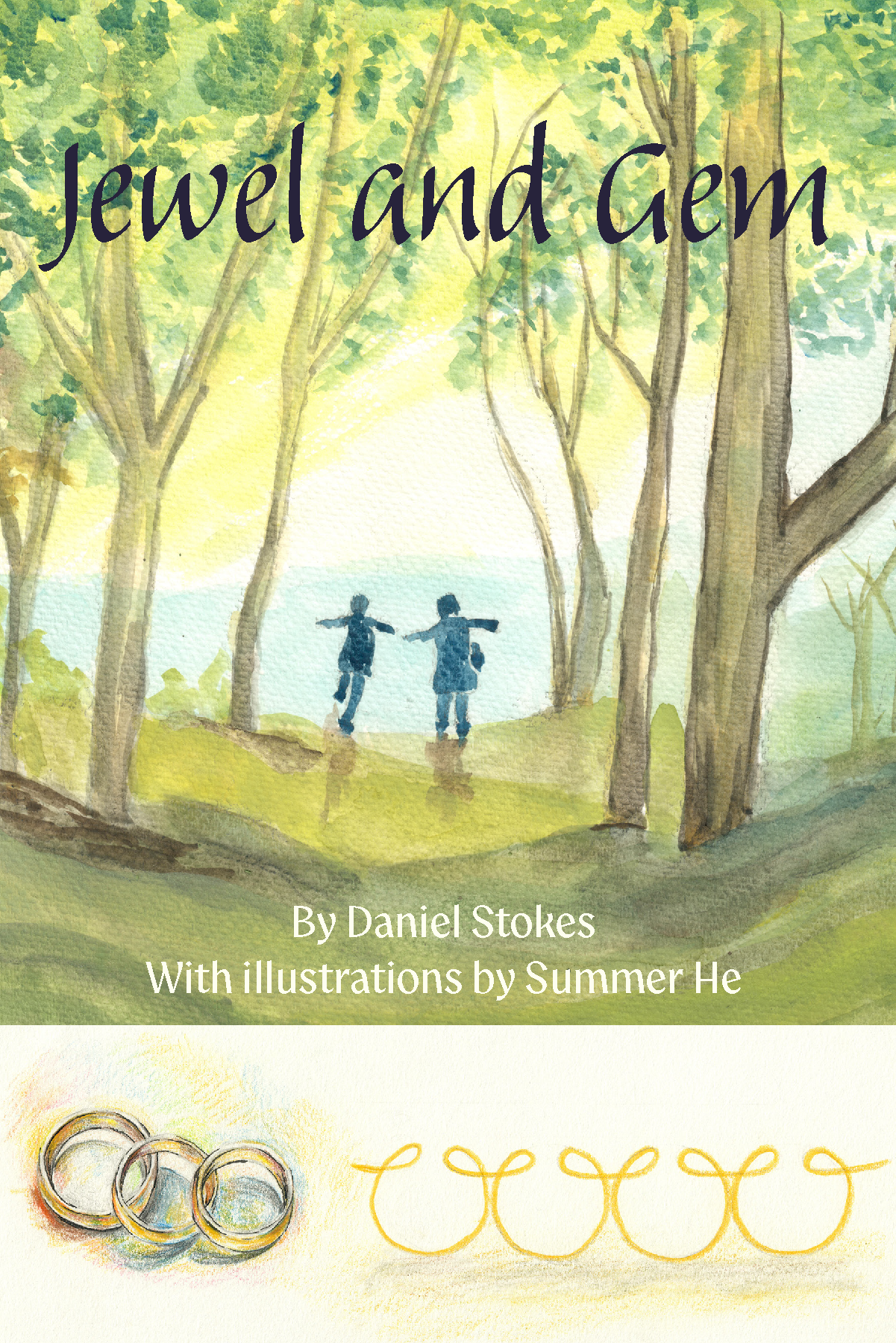
By Daniel Stokes and Summer He
When the golden rings of Goodness, Beauty, and Truth are stolen from their village, siblings Jewel and Gem know they can’t sit idly by. Braving shadowed forests, treacherous mountains, and whispers of ancient magic, they set out on a journey that will test their courage, wits, and the bond between them. Along the way, they face creatures and challenges that seem impossible—but the greatest challenge may lie in understanding the heart of the dragon who guards the treasure. Will the siblings succeed in their quest, or will the adventure change them in ways they never imagined?
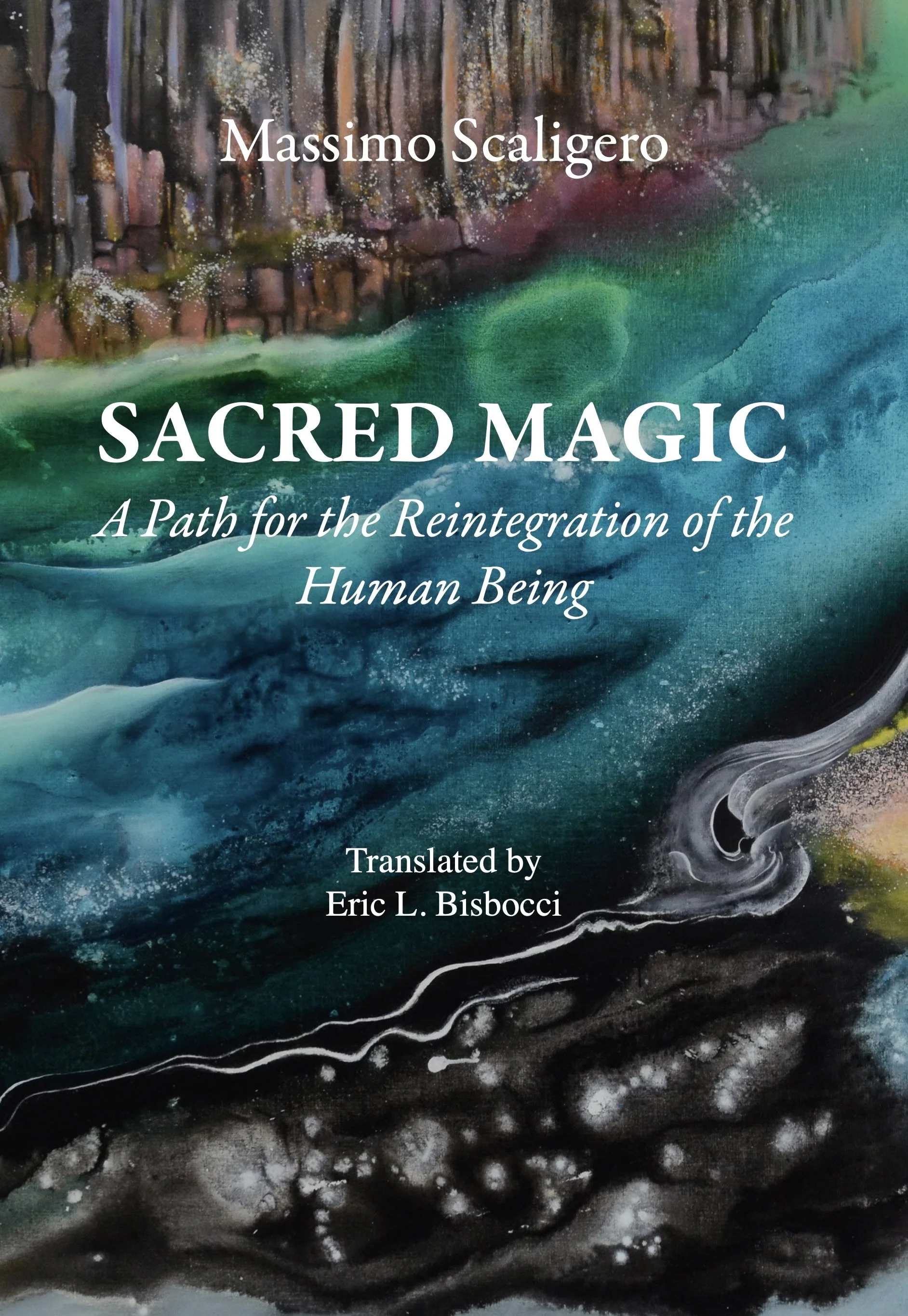
By Massimo Scaligero
We do not know how we think, and even less do we know the organ by means of which we think. And yet, with this insufficient thinking, we place ourselves before the nervous system, and at the physiological and psychological level, we presume to interpret its function, seeing it in relation to what we cannot perceive.... Therefore, no physiology or psychology penetrates the mystery of illness, of anguish, of pain, of longing or of fear: because it is, in any case, an investigation that is itself subjected to the conditions that render illness, anguish, pain, longing and fear, necessary. In truth, the lance that injures Amfortas is still embedded in the wound. The wound bleeds all the time and no hand can keep it from bleeding, except the hand that knows how to grasp the magic weapon and make of what wounds and kills, what heals and resurrects.

By Leif Garbisch
Oliver Birch, almost 14, rides his bike to deliver a birthday pound cake to his Uncle Theo. It is a Friday in April, Good Friday on the Eastern Shore of Maryland. Oliver arrives in the late afternoon to a seemingly empty house. When Oliver can’t find his uncle, he climbs the stairs and discovers Theo hanging dead from an oak beam, his feet bare and a pile of clothes neatly folded on the bed.
This is a threshold moment for Oliver, an instance when he stands at the edge between unknowing and knowing. It is the first difficult step he takes towards a greater understanding of what it means to be a human being on earth. In chapters that take us through the years, Move is the story of this and other significant experiences in the lives of Oliver, his sister, Cricket, and his parents, April-Mei and Mika. Cricket continues to struggle with the very real presence of death. April-Mei is learning to accept the ebb and flow of daily life. Mika looks for answers in the natural world. And Oliver holds his family, including Theo, through life and death as everyone pushes step by step closer to love.

By Massimo Scaligero
“…The Mystery of Androgyny can be contemplated as a moment of our formative power as human beings, which arose from our ability to gather forces more elevated and, therefore, deeper, relative to the lunar element strengthened on the physical plane by the Sun’s separation from the Earth. The currents capable of ruling the lower lunar element, would be recognizable in the aforementioned symbol of the Virgin that corresponds to the aspect of the Isis-Sophia. We will see during the course of the present study how the path toward restoring Androgyny’s radical force is the undertaking alluded to in the saga of the Grail and likewise corresponds to the symbol of Isis Sophia. This (Isis-Sophia), in fact, takes on and redeems within itself the tenebrous Hecate. We will see, in any case, why woman holds the keys to the reintegration of man (so that the Virgin would be called Janua Coeli) and how the present civilization can risk permanently losing the sense of such a reintegration, by reducing woman to man’s erotic companion, or to a mere begetter of children…”
Massimo Scaligero (born Antonio Sgabelloni: 1906-1980), was an Italian spiritual teacher who fathomed the depths of both Eastern and Western esoteric streams (particularly, yoga and Anthroposophy) through direct experience. He was an independent spiritual researcher, who emphasized the path of living thinking (La Via del Pensiero), epistemologically aligned with Rudolf Steiner’s Philosophy of Freedom. He is the author of a number of works including The Light (La Luce), The Secrets of Space and Time, A Treatise on Living Thinking, A Practical Manual of Meditation, The Logic Against Humanity, The Logos and the New Mysteries, as well as his autobiography, From Yoga to the Rose Cross, all published by
Lindisfarne Books.
By Leif Garbisch
What is life? And why on earth does it matter?
Life remains an ongoing mystery. It is the mystery from which everything has come to exist. Because of its secretive nature, life echoes as a question. It ripples across the entire universe, as if the universe is a body of water. And lucky for us, the echoes and ripples of life take place very specifically here, on earth. They take shape as spirit and matter. They take shape as all we can know in the living universe. In this sense even electrons, clouds, and dust are as much to do with the living universe as are plants, animals, and people. Everything that happens in the universe is a process of life itself that becomes an ongoing, living experience. And luckier still, this living experience leads both fundamental life and each one of us towards love. The earth is where the mystery of life becomes something we actually take part in. This is where the mystery becomes less of a secret and more of a responsibility. Moment by moment. Word by word. Each of us is becoming love, whether we know it or not. Better to know it.
Life living love. This is the framework of our existence. It is the path we are on – from life through the vastness of living to love. The Well of Understanding explores our human experience on earth. The book speaks to the meaningfulness of each person and to the countless connections each of us has with all of life. We each begin with life, a gift of being. Days then years and, yes, even lifetimes are spent living on earth. All for the sake of love, if we can get there. Life living love. These three words of never-ending content and infinite reach guide us on earth when we are willing to enter their depth. And it is up to each of us whether we do this or not. It is up to you, and it is up to me. And if the earth had a voice, which it does, you and I would hear in our souls the world’s patient encouragement. And if love had a truth, which it does, you and I would begin to know in our hearts what we each must now do with our unique and necessary lives.